


Function of Solar Panel
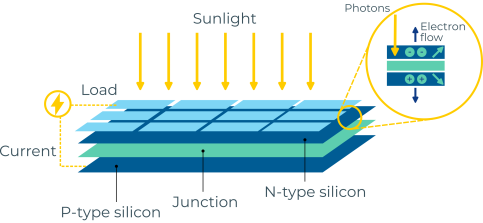
PV solar modules work according to the principle of the photovoltaic effect, i.e. the conversion of sunlight into electricity. The photovoltaic cells in PV solar modules are made of silicon, a material that converts sunlight into electricity very efficiently. When sunlight hits the solar cells, an interaction takes place inside the cell between the incident sunlight and the doped semiconductor of the solar cell. Electrons are released, which flow through the circuit and generate a current. This current can then be used to power electrical devices and charge batteries. The latest generation of solar panels can convert about 22% of solar energy into electricity. The following shows the basic working principle.
Regulations
Solar panels can be installed on all passenger and dry goods cargo vessels. If dry ADN goods or ADN containers are transported, solar panels on hatch covers must not be used and disconnected. If bulk ADN cargo is loaded, the panels shall be stored separately and dark to ensure that no voltage is present on the panel.
Technical Concept
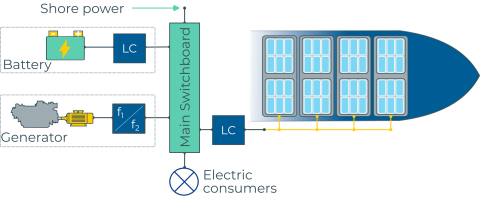
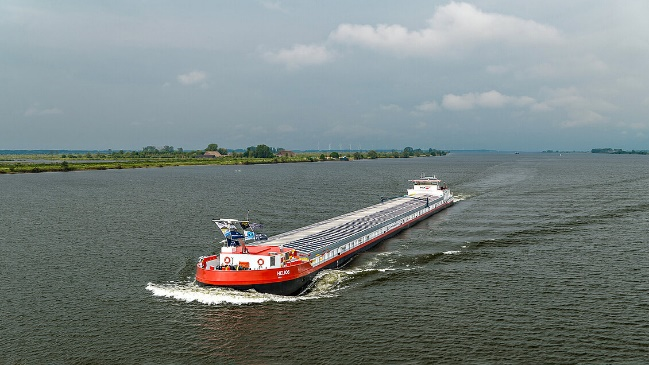
On cargo vessels, solar panels can be mounted on the hatch covers. On the market there are two options available: either to retrofit existing hatch covers by mounting the panels or to install new hatch covers with integrated panels. The shows how the solar panels can be integrated in the on-board grid.
For coastal vessels there might be a future option with mounted panels that can easily be removed if cargo is to be transported on deck.
Each hatch cover has a connection to a collecting line. If the hatch covers need to be moved, they need to be disconnected first.