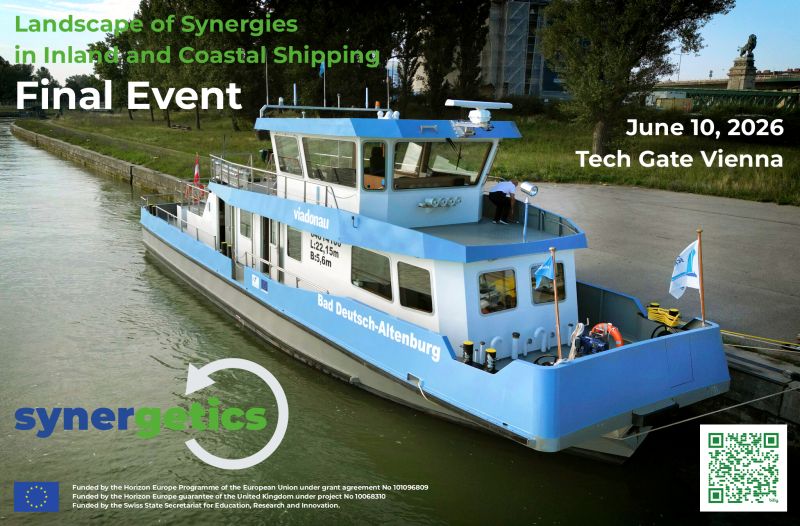
On 10 June 2026, the Innovation Action SYNERGETICS held its final event, bringing together project partners, stakeholders and experts to reflect on more than three years of collaboration dedicated to the decarbonisation of inland and coastal shipping.
Following 42 months of intensive work, SYNERGETICS has successfully demonstrated that retrofitting existing inland and coastal vessels can provide an economically attractive and effective pathway towards reducing emissions while maintaining the competitiveness of European fleets.
Key results showed significant potential for reducing fuel consumption and emissions. Hydrodynamic optimisation measures achieved energy savings of 15–35%, while hydrogen dual-fuel operation significantly reduced diesel consumption and particulate emissions. Methanol-based propulsion systems also proved to be a promising low-emission option for inland navigation.
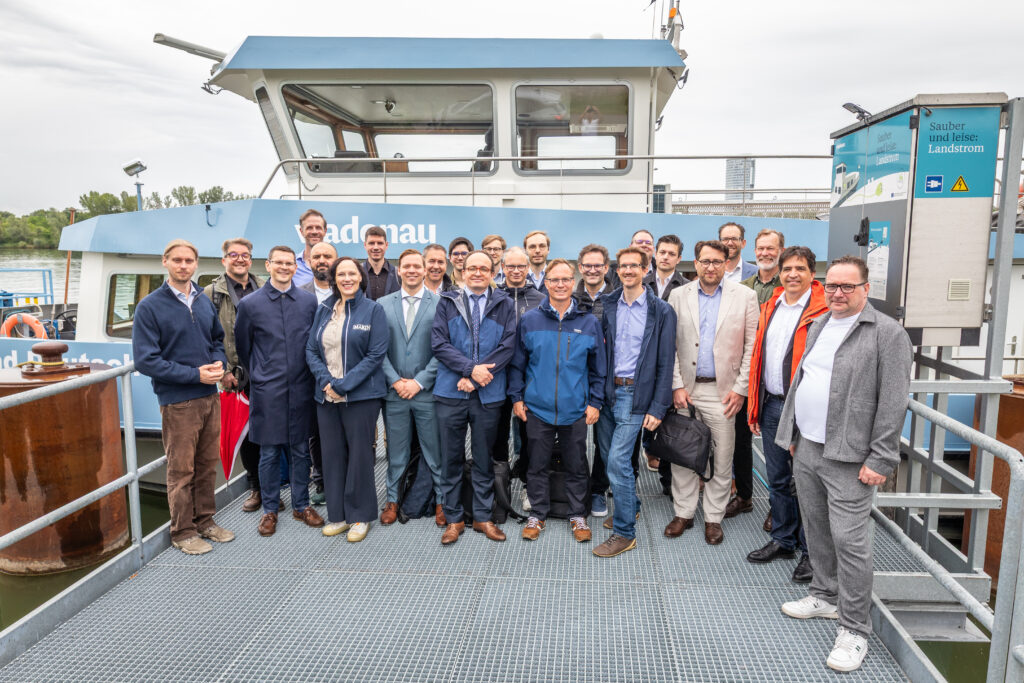
Participants had the opportunity to visit the viadonau Bad Deutsch-Altenburg demonstrator vessel in the morning and to learn more about the project’s final activities and achievements during the sessions held at Tech Gate Vienna.
The afternoon programme featured two „Landscapes of Synergies“ panel discussions, which provided an opportunity to look beyond the project itself and discuss the broader framework required for the successful green transition of inland and coastal shipping.
The first panel, Policy, Regulations and Applied Science, moderated by Prof. Elimar Frank (OST), brought together representatives from the European Commission, the Central Commission for the Navigation of the Rhine and industry. Muhammed Elemenler (European Commission), Benjamin Boyer (CCNR) and Igor Sauperl (LEC GmbH) discussed the importance of aligning research, regulation and technological development to accelerate the deployment of low-emission solutions and to create a supportive framework for innovation.
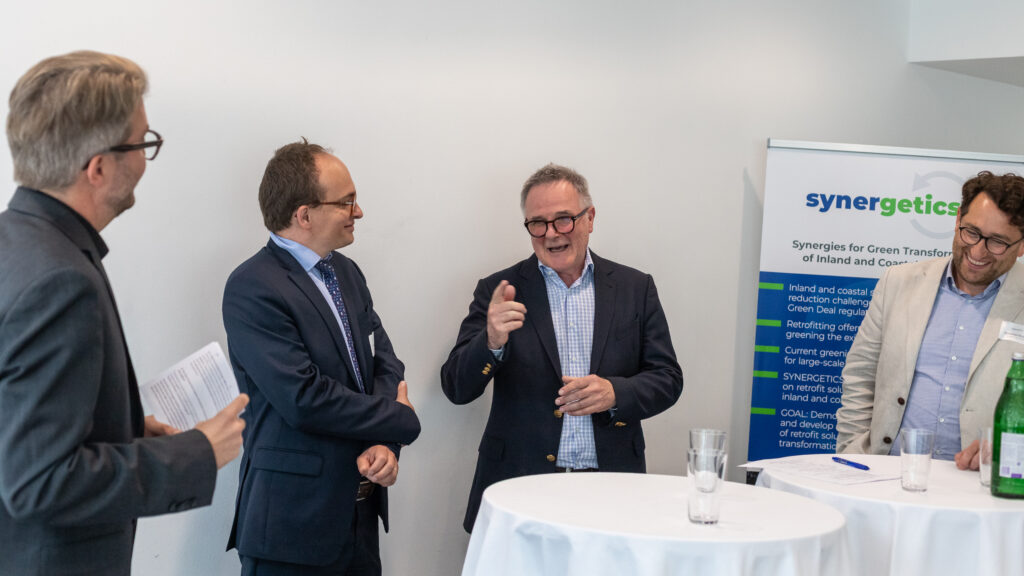
The second panel, European Greening Retrofit Projects, moderated by Niels Kreukniet (EICB), focused on experiences and lessons learned from several European initiatives. Alessandro Iafrati (RETROFIT55) and Benjamin Friedhoff (DST) exchanged views on retrofit pathways, alternative fuels and the importance of cooperation between projects in order to maximise impact and support the transition towards climate-neutral waterborne transport.
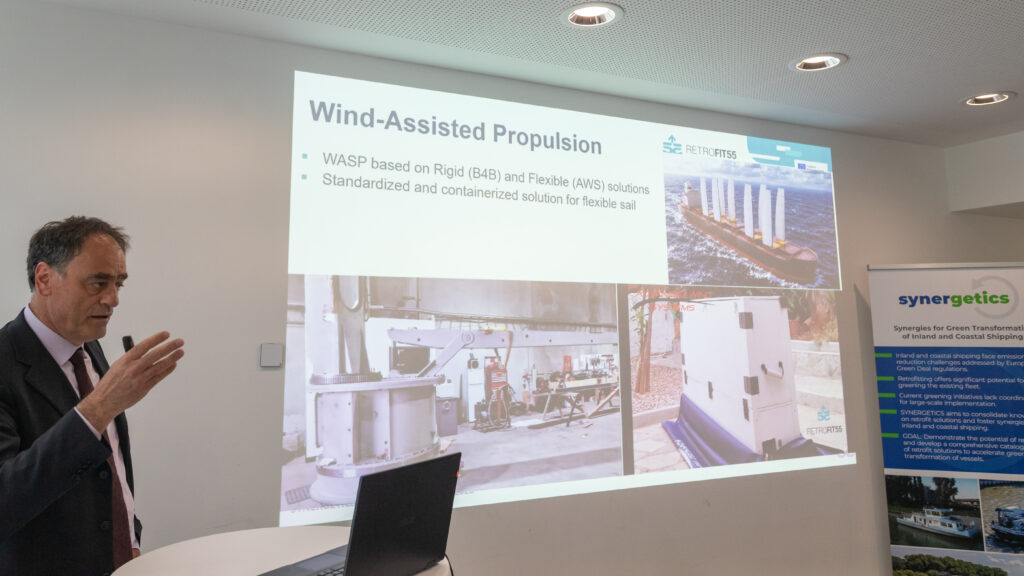
Beyond the demonstrations, the project developed a number of practical tools to support the large-scale uptake of retrofit solutions in inland and coastal shipping.
The Catalogue of Greening Retrofit Solutions provides an overview of available technologies together with information on technology readiness, costs and infrastructure requirements. The Handbook for Implementation of Greening Retrofit Solutions offers practical guidance on implementation, operational impacts and approval procedures. In addition, the Decision Support Tool helps vessel owners identify suitable retrofit measures and make informed investment decisions based on the characteristics of their vessels. Future-oriented scenarios were also developed to support policy and industry decision-making and accelerate the deployment of sustainable retrofit solutions.
These tools will remain freely available after the end of the project and will continue to be maintained through the project website under the Tools section.
The successful completion of SYNERGETICS marks an important milestone for the green transformation of inland and coastal shipping. By demonstrating retrofit technologies under real operating conditions and fostering collaboration across disciplines, sectors and European projects, SYNERGETICS has shown that practical and economically viable solutions are already available to support the sector’s transition towards a more sustainable future.